Metal and Ceramic Braces
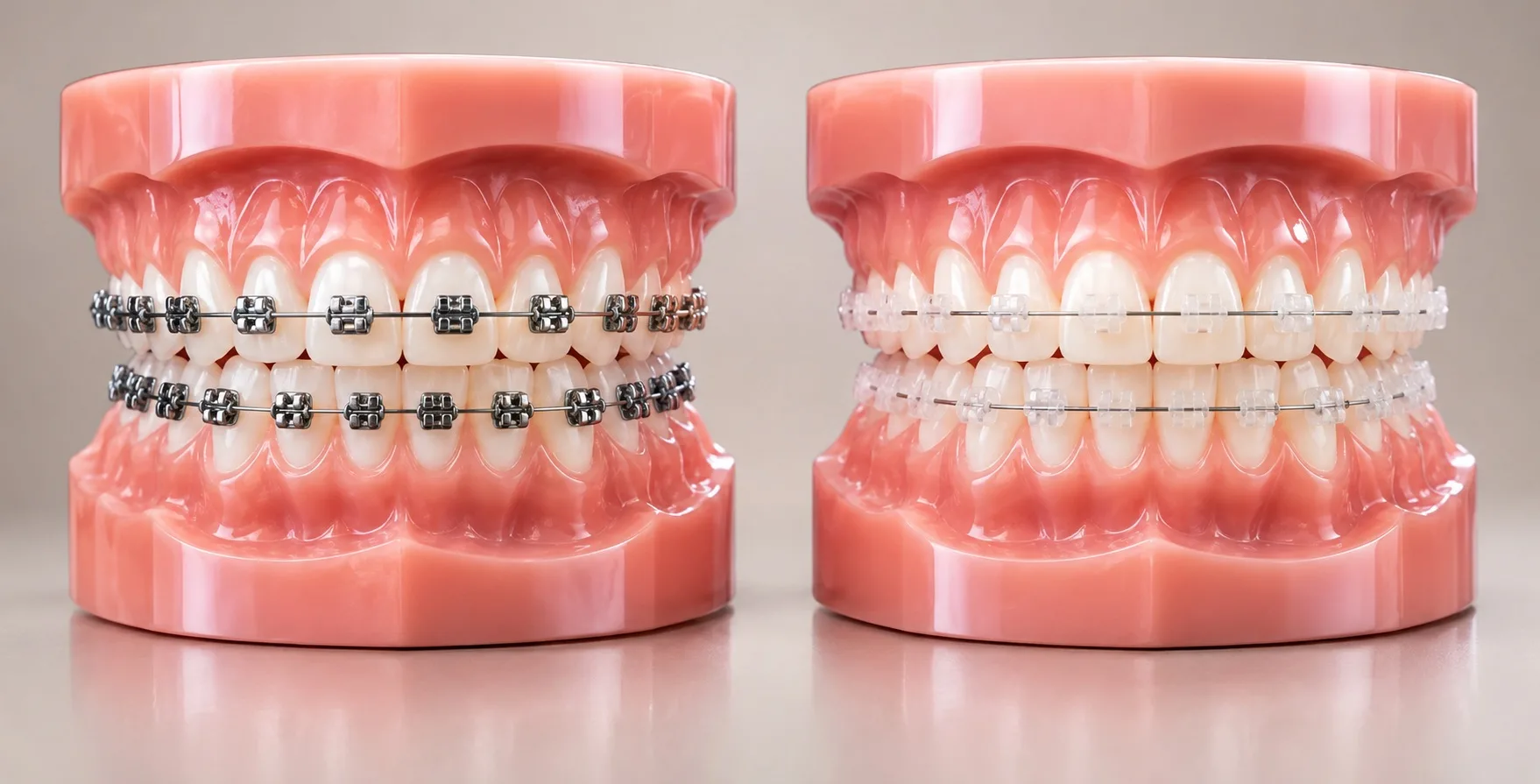
Metal and ceramic braces are fixed orthodontic appliances used to correct tooth alignment and bite relationships. Learn about their differences, features, and the orthodontic treatment process.
Orthodontic Treatment with Metal and Ceramic Braces
Metal and ceramic braces are fixed orthodontic appliances used to move teeth in a controlled manner. Brackets are bonded to the tooth surfaces, and orthodontic archwires passing through them help guide tooth movement and improve dental alignment and bite relationships.
Both types of braces work according to similar biomechanical principles. Their main differences are their appearance and material properties.
Metal Braces
Metal braces are a durable and widely used orthodontic treatment option with a long history of clinical use.
Usually made from stainless steel, metal brackets can be used to correct a wide range of dental alignment and bite problems.
One of their main advantages is their durability. However, because metal brackets are more visible on the teeth, their appearance may influence the preferences of patients with aesthetic concerns.
Ceramic Braces
Ceramic braces are a less noticeable orthodontic treatment option because their tooth-colored or translucent appearance blends more naturally with the teeth.
They may be preferred by adolescents and adults who wish to reduce the visibility of their braces during treatment.
Ceramic braces move teeth according to the same fundamental principles as metal braces. However, differences in material properties may affect their resistance to fracture, friction, and certain aspects of clinical use.
Differences Between Metal and Ceramic Braces
Appearance: Metal braces are more noticeable, while ceramic braces are less visible because of their tooth-colored appearance.
Durability: Metal brackets are generally more resistant to fracture. Ceramic brackets may be more susceptible to damage from excessive forces or impacts.
Comfort: Temporary sensitivity or discomfort may occur with either system, particularly at the beginning of treatment or after adjustment appointments. Comfort depends on the appliance and individual patient factors.
Treatment Duration: Treatment time is not determined solely by whether metal or ceramic brackets are used. Dental and jaw relationships, the complexity of the orthodontic problem, treatment mechanics, and patient cooperation all play important roles.
How Does Orthodontic Treatment Work?
Examination and Assessment: During the initial consultation, tooth alignment, jaw relationships, bite characteristics, and facial structures are evaluated. A treatment plan is developed based on the clinical examination and any necessary diagnostic records.
Bracket Placement: The selected brackets are bonded to the teeth using special dental adhesives, and orthodontic archwires are placed.
Regular Appointments: Tooth movement is monitored throughout treatment. Archwires and other orthodontic components are adjusted when necessary.
Retention Phase: After active treatment is completed, suitable retainers are used to help maintain the corrected tooth positions.
What Should Patients Consider During Treatment?
Maintaining good oral hygiene is essential during fixed orthodontic treatment. Food debris and dental plaque can accumulate around brackets, increasing the risk of tooth decay and gum problems.
Patients are advised to brush their teeth regularly, clean between their teeth using suitable interdental aids, and take care with hard or sticky foods.
Attending scheduled orthodontic appointments is also important for monitoring treatment progress.
Which Type of Braces Should You Choose?
Choosing between metal and ceramic braces involves more than aesthetic preferences. The characteristics of the orthodontic problem, the planned treatment mechanics, and each patient’s individual needs should also be considered.