Lingual Orthodontic Treatment
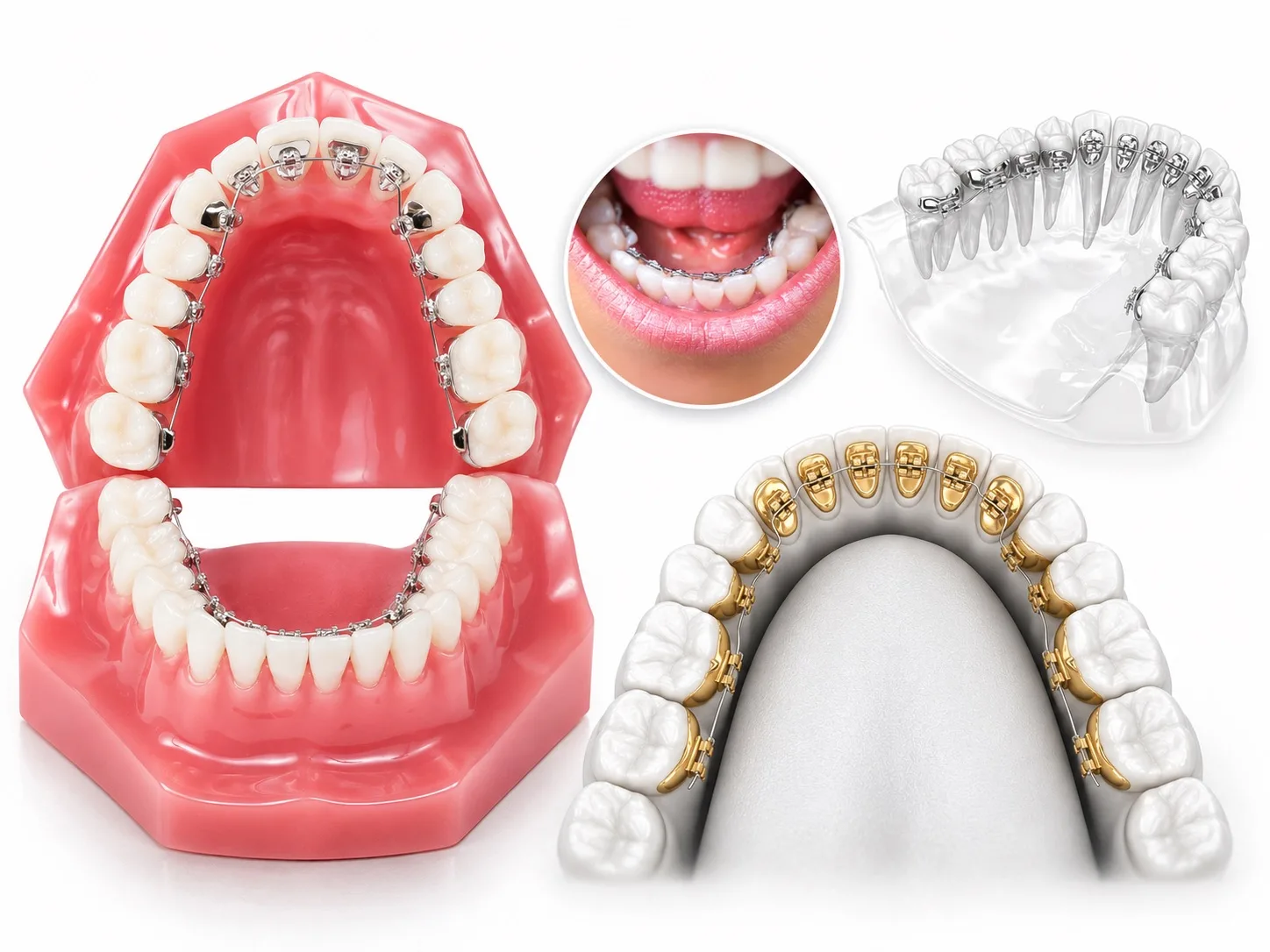
Lingual orthodontic treatment is a fixed orthodontic method in which brackets are attached to the inner surfaces of the teeth. Learn about the features, advantages, and treatment process of this discreet orthodontic option.
Lingual Orthodontic Treatment
Lingual orthodontic treatment is a type of fixed orthodontic treatment in which brackets are placed on the inner, tongue-facing surfaces of the teeth rather than on their front surfaces.
Unlike conventional braces, lingual orthodontic appliances are positioned behind the teeth, making them largely invisible when viewed from the front.
Lingual orthodontics may be considered for patients who require fixed orthodontic treatment but prefer their braces to be less noticeable.
How Does Lingual Orthodontic Treatment Work?
Lingual braces operate according to biomechanical principles similar to those used in conventional fixed orthodontic systems.
Brackets bonded to the inner surfaces of the teeth, together with orthodontic archwires, are used to achieve controlled tooth movement.
Because of the anatomical characteristics of the inner surfaces of the teeth, the design and application of lingual orthodontic systems differ from those of conventional braces.
In some lingual orthodontic systems, brackets and archwires can be custom-made to fit each patient’s dental anatomy.
Features of Lingual Orthodontic Treatment
Discreet Appearance: Since the brackets are positioned behind the teeth, they are generally not visible from the front. This may be an advantage for patients who prefer less noticeable orthodontic appliances.
Fixed Orthodontic System: Lingual brackets are bonded to the teeth and cannot be removed by the patient during treatment. Tooth movements are controlled using orthodontic archwires and, when necessary, additional appliances.
Individualized Treatment Planning: The appropriate lingual system and treatment mechanics are selected based on the patient’s tooth positions, bite relationships, and required orthodontic movements.
Adaptation to Daily Life: Temporary tongue irritation, speech changes, or an adjustment period may occur at the beginning of treatment. These experiences vary between individuals.
Who Is Suitable for Lingual Orthodontic Treatment?
Lingual orthodontic treatment may be used to correct crowded teeth, spacing problems, and certain bite irregularities.
It may be an option for adults who wish to undergo orthodontic treatment without visible brackets on the front surfaces of their teeth.
However, not every orthodontic condition or dental anatomy is equally suitable for lingual braces.
Suitability is determined through an individual assessment of tooth positions, bite relationships, oral anatomy, and the orthodontic movements required.
How Does Lingual Orthodontic Treatment Progress?
Examination and Assessment: During the initial consultation, tooth alignment, jaw relationships, bite characteristics, and facial structures are evaluated. Necessary orthodontic records are obtained to determine suitable treatment options.
Treatment Planning: The lingual bracket system and planned tooth movements are selected according to the patient’s individual orthodontic needs.
Bracket Placement: Brackets are bonded to the inner surfaces of the teeth using special dental adhesives, and orthodontic archwires are placed.
Regular Appointments: Tooth movements are monitored throughout treatment. Archwires and other orthodontic components are adjusted when necessary.
Retention Phase: Following active orthodontic treatment, suitable retainers are used to help maintain the corrected tooth positions.
What Should Patients Consider During Treatment?
Maintaining good oral hygiene is particularly important because lingual brackets are positioned on the inner surfaces of the teeth.
Careful cleaning around the brackets, appropriate interdental cleaning, and regular toothbrushing are essential.
During the initial stages of treatment, patients may experience temporary tongue irritation or changes in speech due to contact with the brackets.
Avoiding hard or sticky foods and attending scheduled orthodontic appointments are important for monitoring treatment progress.
Lingual Orthodontics or Clear Aligners?
Lingual orthodontics and clear aligners are two different approaches that may be considered by patients who prefer less noticeable orthodontic appliances.
Lingual braces are fixed to the inner surfaces of the teeth, whereas clear aligners are removable orthodontic appliances.
Both approaches have advantages and limitations. Treatment selection should consider the patient’s aesthetic preferences, dental and jaw structures, orthodontic needs, and ability to follow treatment instructions.
The most appropriate orthodontic treatment method should be determined through a comprehensive clinical assessment and individualized treatment planning.